

Contact / Consult
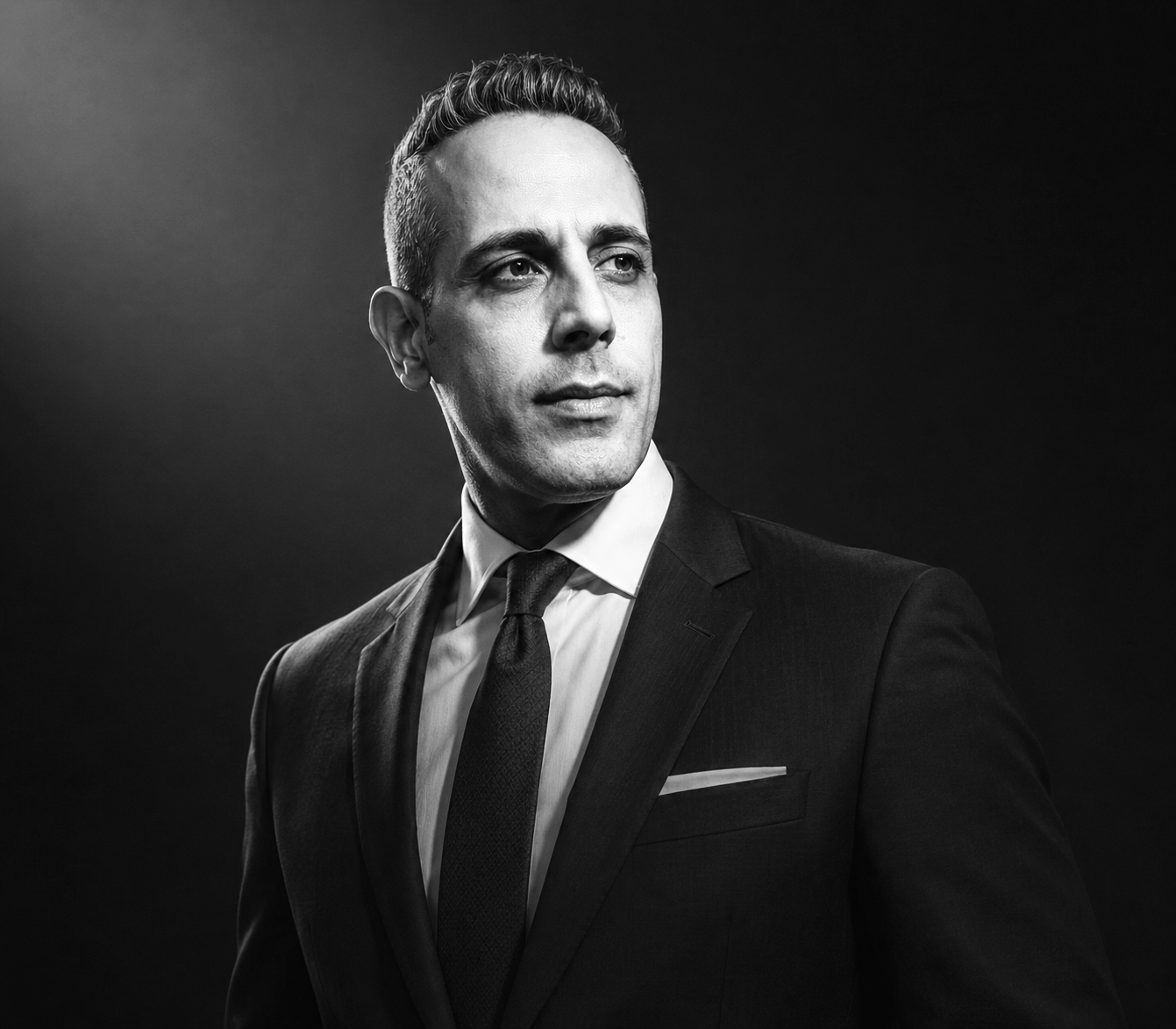
Arjay Asadi
Originator of Recursive Science → Intelligence in Motion
Runtime Intelligence · Longitudinal Computational Behaviour
1 647 267 5578
hello@arjayasadi.com
TORONTO, ONTARIO, CANADA
Start a Conversation
If you are investigating an AI incident, evaluating a long-horizon system, designing an evidence architecture, or considering a Fieldglass pilot, tell me briefly what you are working on. The starting point is not a sales demonstration.
It is the evidence problem your organization needs to solve.
Consult
I work with organizations building, operating, investigating, or governing AI systems whose behavior develops across extended interactions, agents, tools, roles, and workflows. Through SubstrateX, I translate the scientific foundations into practical architecture, instrumentation, evidence systems, and advisory services. This work combines more than twenty years of experience in enterprise technology and systems architecture with an independent research program focused on Runtime Intelligence, longitudinal computational behavior, and Runtime Evidence.
The objective is straightforward:
Make consequential computational behavior observable, reconstructable, and accountable from the evidence available.
Runtime Evidence and Incident Reconstruction
Investigate operational transcripts, agent histories, workflow records, tool interactions, incident logs, and other longitudinal records through source-bound reconstruction.
This work can help establish:
what evidence is available;
how observable behavior developed through time;
which transitions and recurring structures can be reconstructed;
where drift, pressure, instability, or recovery became measurable;
what evidence remains missing; and
which conclusions the record can and cannot support.
The purpose is not to manufacture a root-cause narrative.
It is to produce an inspectable account of what the available evidence supports.
How I Can Help
-
Fieldglass® is a browser-local Runtime Evidence Observatory for reconstructing and investigating longitudinal computational behavior.
A Fieldglass engagement can begin with a controlled validation case or an operational record that your organization is authorized to examine.
The record is qualified, converted into a canonical runtime, processed through a declared measurement architecture, and preserved as a source-bound evidence artifact. Findings can then be inspected through runtime reconstruction, scientific instruments, guided investigation, Human Read, and the Runtime Evidence Passport.
A pilot can evaluate:
source and telemetry coverage;
deterministic reconstruction;
role and interaction dynamics;
runtime trajectories and regimes;
temporal-marker availability;
drift and stability-related measurements;
claim-boundary conformance;
replay consistency; and
evidence preservation and export.
Fieldglass does not infer hidden model state, determine intent, assign blame, or certify objective truth. Its purpose is to establish what can responsibly be reconstructed from observable records.
-
I help organizations design evidence systems in which measurements, interpretations, visualizations, and reports remain connected to their originating records.
This may include:
evidence-object and provenance architecture;
canonical runtime design;
source and adapter authority;
role-aware ingestion;
measurement and instrument contracts;
temporal-marker governance;
deterministic evidence identity;
claim boundaries;
evidence-preserving exports; and
human investigation workflows.
The governing principle is:
No claim should exceed the authority of its evidence.
-
Long-running AI systems introduce architectural questions that do not arise in isolated model calls.
I advise teams on systems involving:
multi-agent coordination;
role and authority structures;
tool orchestration;
external memory and evolving context;
recursive workflows;
human and system handoffs;
operational observability;
failure reconstruction;
evidence retention; and
governance across extended runtime.
The emphasis is on connecting architecture, operation, measurement, and accountability rather than treating them as separate concerns.
-
I also welcome serious collaboration involving:
independent replication;
controlled runtime studies;
evaluation datasets;
comparative instrumentation;
temporal and drift dynamics;
evidence architecture;
standards development; and
critical examination of the underlying scientific constructs.
Collaboration does not require prior acceptance of Recursive Science. The work is structured so that its methods, evidence, assumptions, and limitations can be examined directly.
-
I work with teams to translate proposed behavioral constructs into explicit measurement and validation requirements.
This can include:
defining observables and reference conditions;
separating measurements from interpretive projections;
establishing expected positive and negative cases;
constructing controlled evidence scenarios;
testing replay determinism;
examining false-positive behavior;
documenting unavailable evidence;
developing validation bundles; and
preparing methods for independent replication.
Deterministic computation establishes reproducibility of the method. Scientific validity requires calibration, comparative testing, and independent challenge.